

GS1 UK recently released new research on how blind and low-vision people experience food shopping. As someone who shops without sight every week, a lot of the findings felt very familiar. But seeing the scale of the problem laid out in data is useful, because it shows where the industry is still falling short and where the biggest opportunities actually lie.
So in this blog, I wanted to share my take on the study: what stood out, why accessible packaging matters more than ever, and what this means for brands and retailers who want to make accessibility part of how they operate, not an afterthought.
5 key findings
-
Barriers are everywhere: GS1 UK’s research highlights widespread obstacles — unreadable labels, poor contrast, low lighting and inconsistent layouts.
-
Safety risks are routine: Forty-one per cent of respondents bought products containing ingredients they avoid because they couldn’t read the label.
-
Dependence is baked in: More than half rely on strangers for help; nearly three-quarters believe brands are not investing in accessible packaging.
-
Accessible QR codes are already working: Brands like Unilever, Bayer, Nestlé and Diageo are already making their product packaging accessible to people like me
- Demand is clear: Shoppers want consistent digital access to on-pack information, not scattered pilot schemes.
What the study exposes
As someone who’s blind, none of these findings surprised me. What stood out was how sharply they quantify an experience many of us know all too well. Seventy-one per cent of severely visually impaired people say food shopping is a challenge. The same proportion avoid it altogether. That’s not inconvenience, it’s exclusion that’s built into the design of packaging and stores.
The emotional impact shouldn’t be underestimated either. Relying on strangers to read labels isn’t just impractical; it’s uncomfortable. And when 37 per cent report allergic reactions because they couldn’t access vital information, the conversation stops being about usability and becomes one about safety.
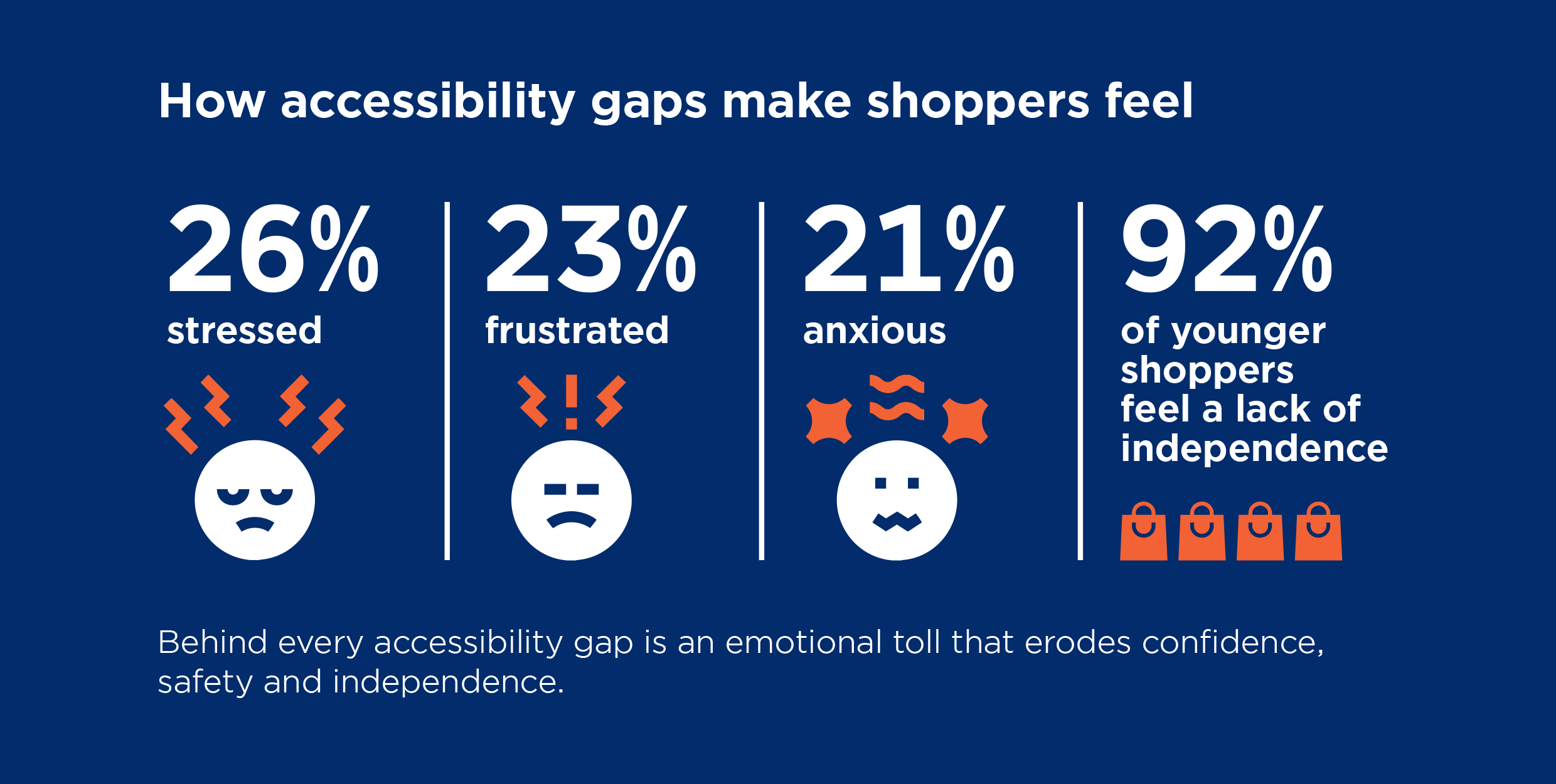 GS1 UK 'Accessibility: The Hidden Barrier In Food Shopping'
The industry’s biggest misunderstanding
Many brands still approach accessibility as a series of isolated fixes. A specialised label on one SKU. A pilot in one aisle. A temporary intervention by staff.
GS1’s research makes the problem clear. Blind and low-vision shoppers don’t need four different access routes across four different sections of the store. We need one reliable, consistent way to access the same product information that sighted shoppers get instantly.
If accessibility only appears occasionally, the experience collapses into guesswork again.
Consistency, not novelty, is what builds independence.
Where GS1 Digital Link creates the foundation
Eighty per cent of respondents said they’d use QR codes for product information if they were widely available. That qualifier matters. A QR solution only works when shoppers can trust it will be present across products, not just a few.
GS1 Digital Link QR codes provide the technical foundation for this consistency. They allow brands to embed product identifiers such as GTINs into a structured web link that can connect to detailed, always-current product information, from ingredients and regulatory details to traceability and consumer content, all from a single code on pack.
However, a standard Digital Link QR code alone doesn’t automatically make that information accessible to blind and low-vision users. Accessibility depends on how the linked content is delivered and how easily it can be found and scanned in the first place.
Packaging can’t grow to accommodate larger text or more detail, but it can point reliably to digital information if shoppers can actually access it.
What Accessible QR codes add (and why this layer matters)
Accessible QR codes (AQRs) build on the GS1 Digital Link foundation by solving the usability challenges that standard QR codes often present in real retail environments. They add long-range, wide-angle scanning so codes can be located and scanned independently by people with sight loss, even on crowded shelves or in low contrast conditions.
This is the layer that enables compatibility with the accessibility workflows people already rely on. AQRs are supported by assistive apps used by blind and low-vision shoppers, including Be My Eyes, Envision and Microsoft Seeing AI, allowing product information to be read aloud, navigated and understood without sighted assistance.
Together, they offer a scalable approach to accessible product information, ensuring ingredients, allergens, instructions and safety details are usable by everyone, without redesigning packaging or introducing separate, parallel systems.
What I see every week in the Zapvision ecosystem
At Zappar, we work with partners across retail and FMCG to make AQRs a default part of packaging, not an experiment. Because AQRs build on the GS1 Digital Link QR codes that many brands are already adopting, they don’t require extra symbols or parallel systems. They integrate directly into existing QR strategies.
Here’s what I see repeatedly:
- Brands realise accessibility isn’t a redesign problem – AQRs fit into current packaging workflows with minimal friction.
- Shoppers immediately feel the difference when access is consistent – Independence increases when the information layer becomes predictable.
- Retailers shift from treating accessibility as a one-off initiative to viewing it as infrastructure when accessibility is embedded into the QR transition, it stops being a side project.
This is where accessibility starts to scale, not through isolated trials, but through adoption across entire product portfolios.
GS1’s findings aren’t new to shoppers with sight loss. They simply put numbers to an experience we encounter every week. The real takeaway is not that accessibility is difficult. It’s that fragmentation is expensive, inefficient and inequitable.
Why this research should push the industry to act
The technology exists. The global standard exists. The demand is overwhelming.The missing piece now is adoption at scale. AQRs aren’t experimental. They’re already delivering independence in real stores, proving that retail accessibility technology can be both practical and commercially viable.
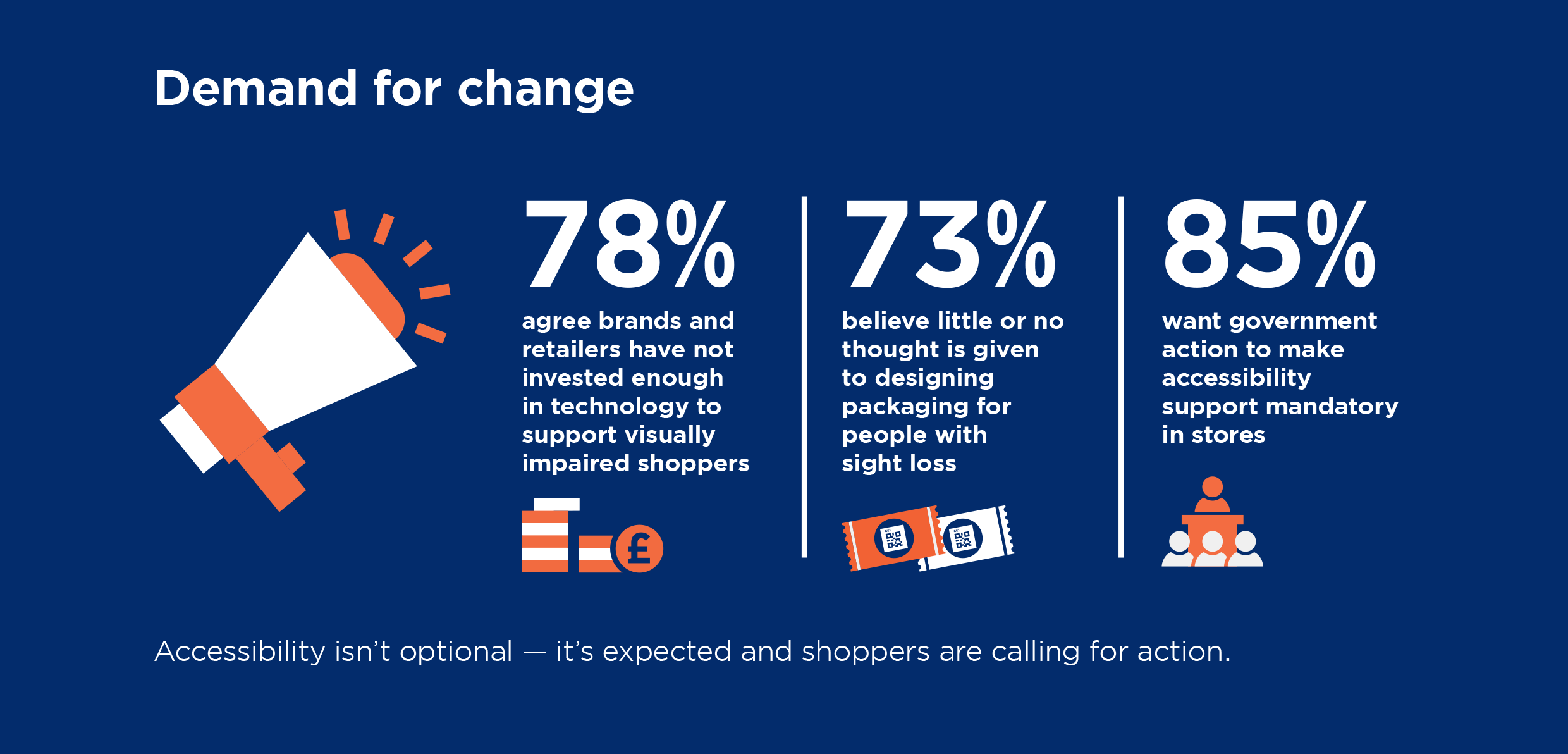 GS1 UK 'Accessibility: The Hidden Barrier In Food Shopping'
Closing thought
Food shopping shouldn’t require sighted assistance, guesswork or compromise. GS1’s research makes that impossible to ignore. If we want retail environments that are genuinely inclusive, we need consistent, predictable access to information, not occasionally, but everywhere.
If your organisation is exploring how to make your packing or retail estate more accessible to people like me, I’m always happy to share what we’re seeing in the ecosystem and what it takes to make accessibility scale in the real world.
 Darren Tan
Zapvision Ecosystem Manager