
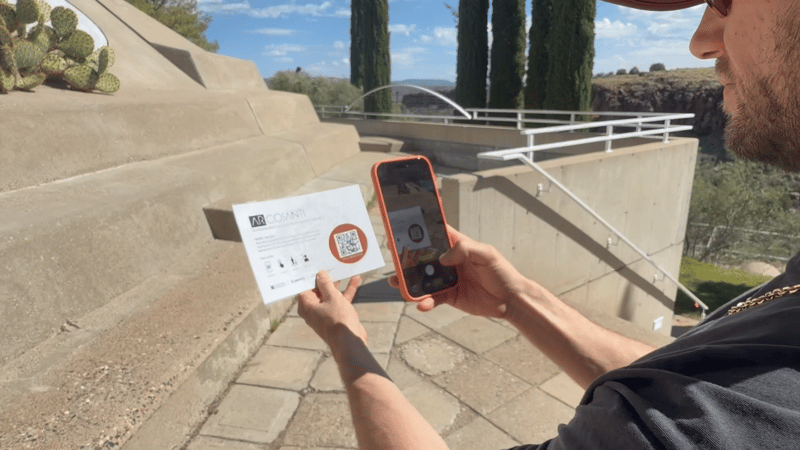
When a nonprofit with no dev team and zero AR experience sets out to share a vast archive of rare architectural work, you don’t expect a cutting-edge immersive experience. But that’s exactly what The Cosanti Foundation pulled off.
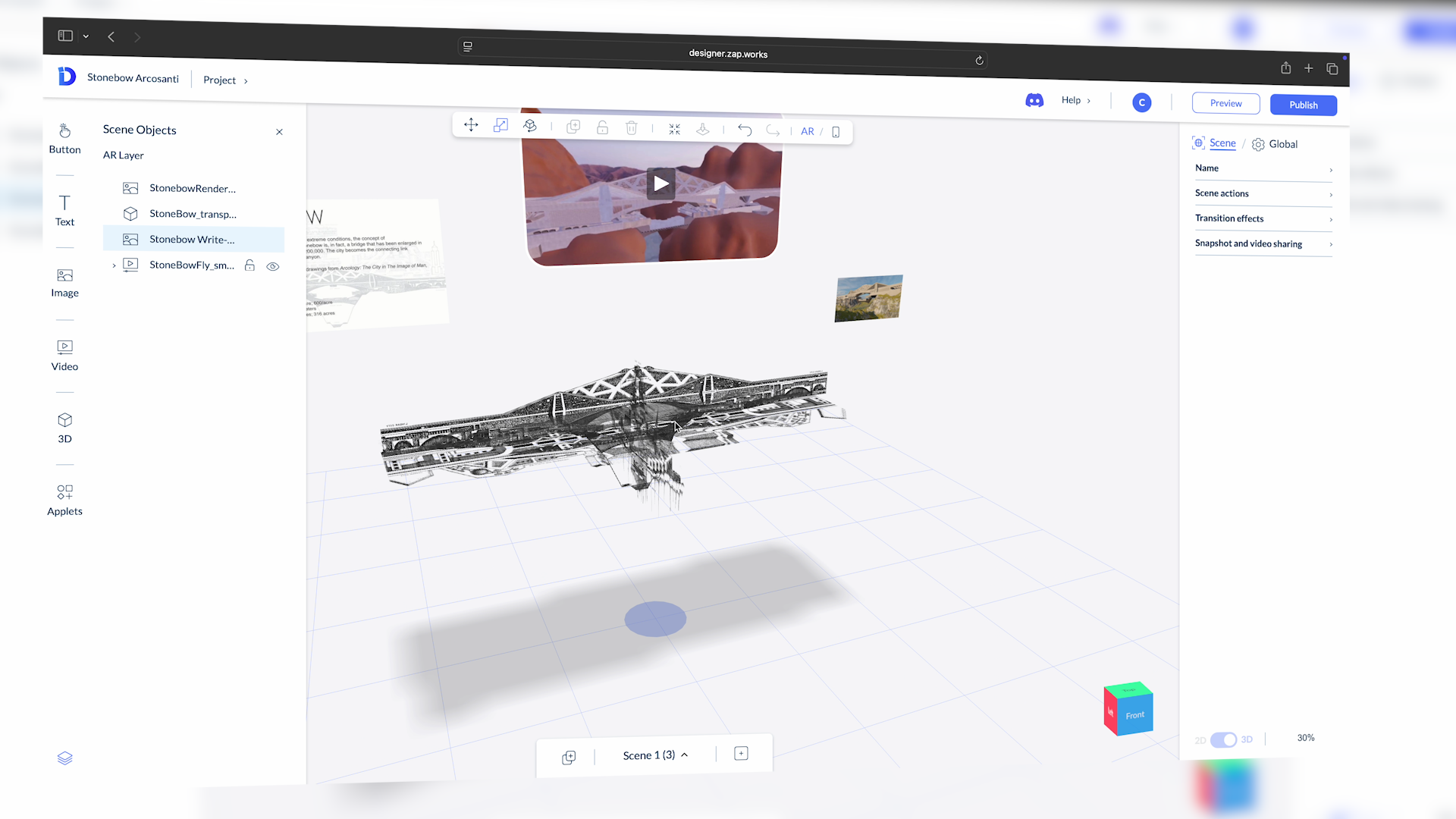
Using Zapworks Designer, they built ARCosanti, a no-code WebAR tour that brings Soleri’s visionary designs to life on-site and in context. In just eight weeks, archival drawings, 3D models, and historic footage were layered onto the real-world architecture of Arcosanti and Consanti, making complex ideas tangible and engaging for thousands of visitors.
About the Client
The Cosanti Foundation is a nonprofit dedicated to preserving and advancing the work of visionary architect Paolo Soleri. Based in Arizona, the Foundation maintains two unique architectural sites—Cosanti and Arcosanti — that serve as living experiments in “arcology,” Soleri’s philosophy that combines architecture and ecology. These iconic sites attract thousands of visitors annually for tours, educational programs, and cultural events.
Meet the Creator
Cameron Lincoln is a multidisciplinary creative and former Arcosanti resident with a passion for storytelling, systems, and social impact. With no prior AR experience, he built the entire ARCosanti project in Zapworks Designer, proving that good tools (and a curious mind) go a long way.
The Challenge
The Foundation holds a vast archive of rare architectural drawings, 3D models, blueprints, and historic media, but much of it has never been seen by the public. They wanted a way to bring these assets to life in a way that was engaging, accessible, and easy to manage with limited resources.
They needed a tool that could:
- Make archival content visible in context right where it was originally created
- Be deployed by a single creator with no AR experience
- Work on-site and remotely
- Be easy for visitors to access on their own devices
Why AR (and why Zapworks)
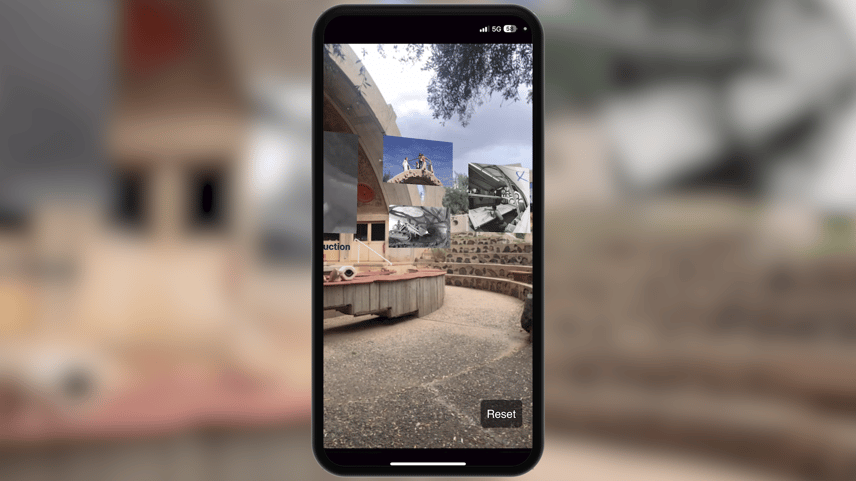
Augmented Reality stood out immediately as the right fit. It allowed the Foundation to superimpose historical materials onto their real-world settings, giving visitors a direct, visual understanding of complex architectural ideas.
But ease of use was non-negotiable. With no development team and only a short contract window, the tool had to be simple enough for a solo creator to build and maintain. That’s why Zapworks Designer was chosen. Its no-code interface made it possible to build and launch polished experiences quickly, without sacrificing quality.
The Solution: ARCosanti
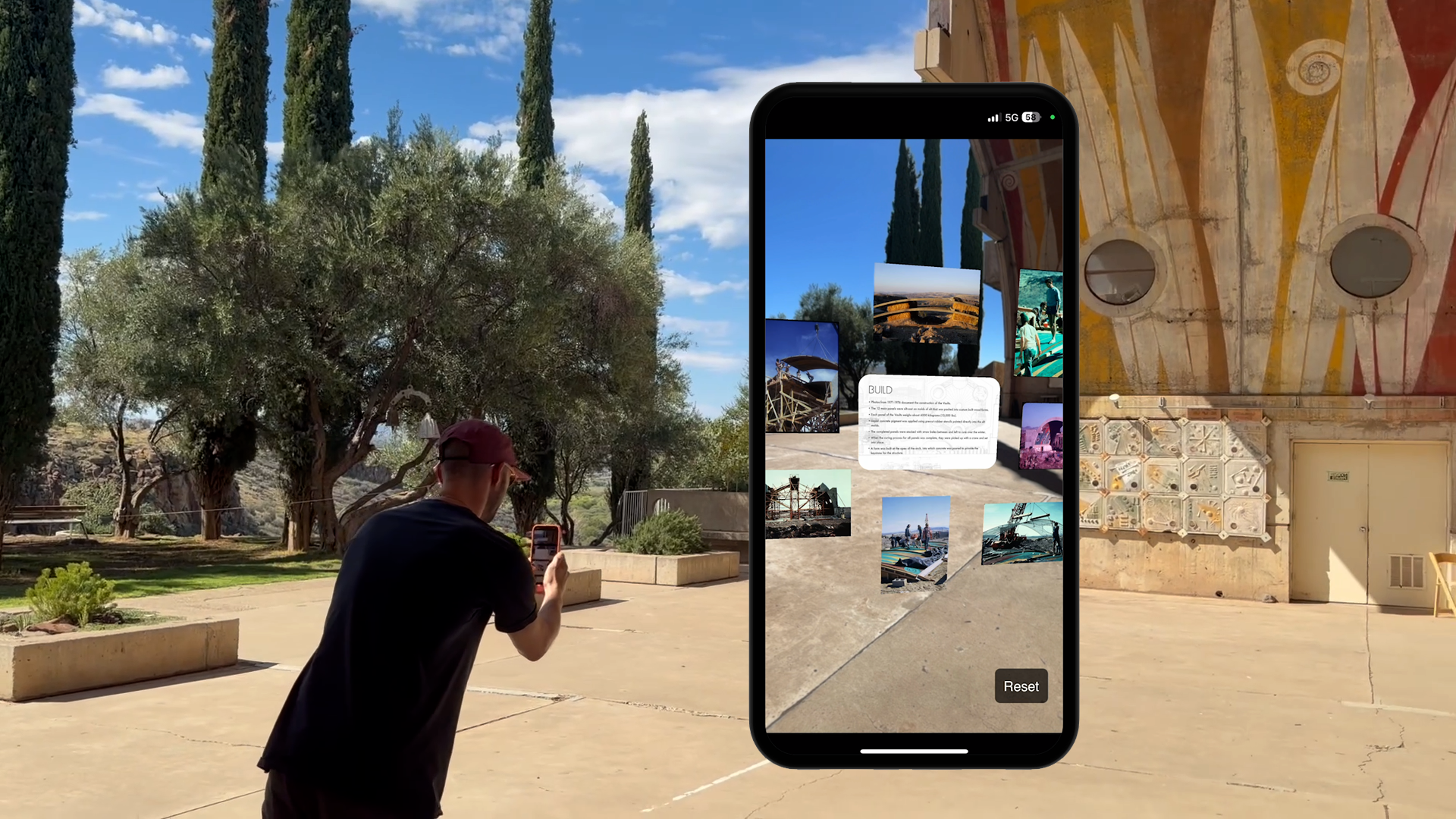
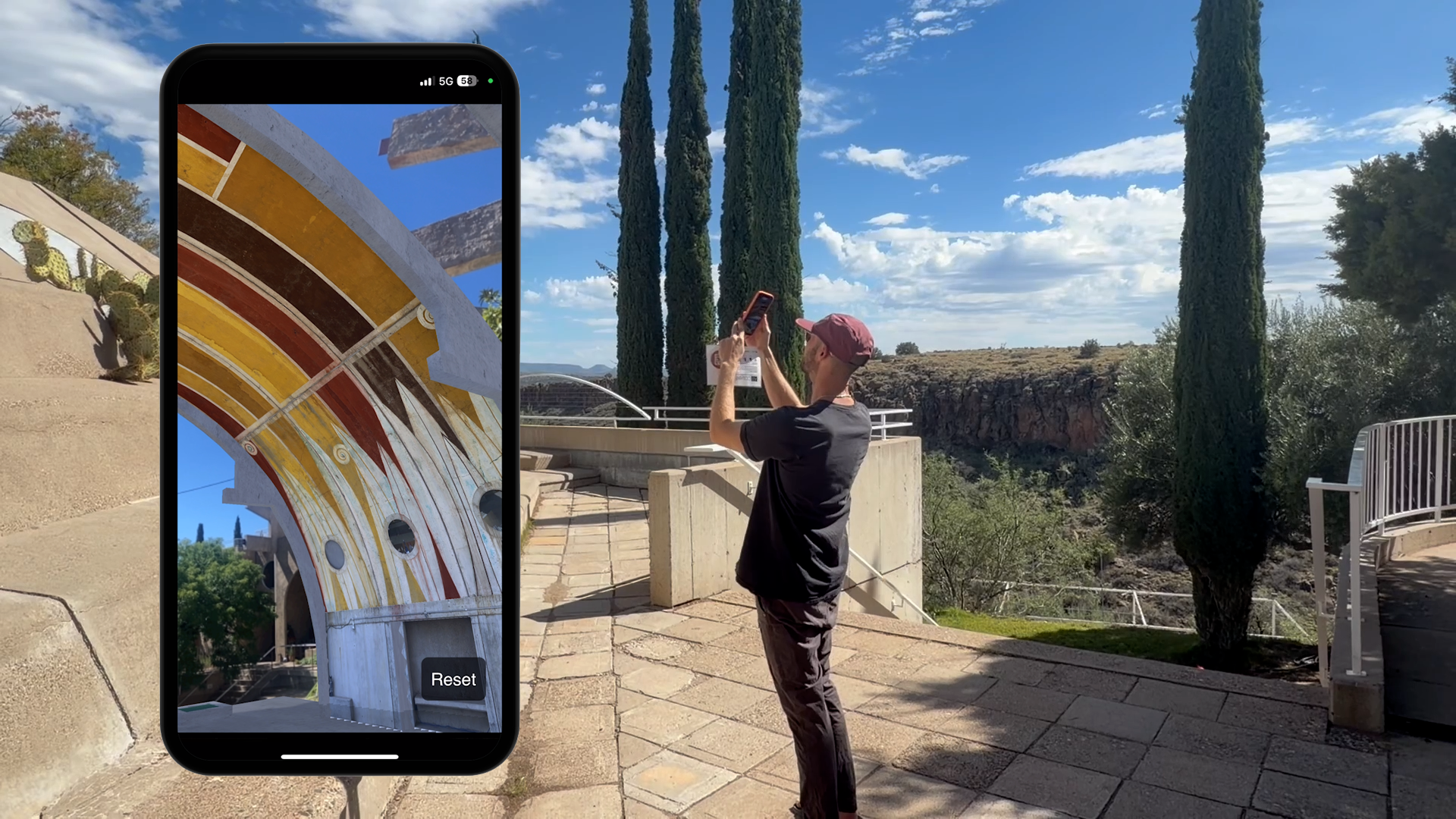
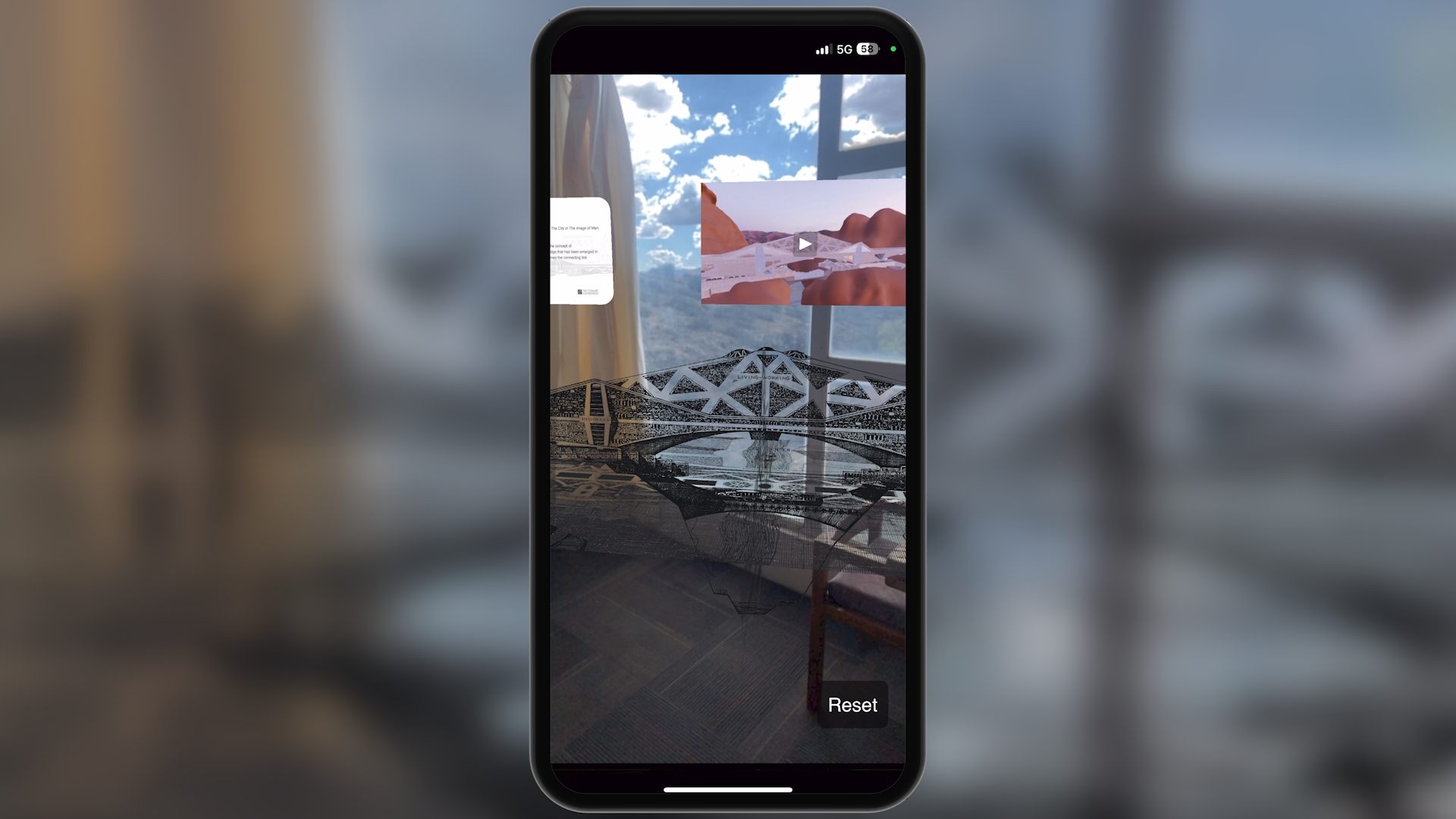
In just eight weeks, a WebAR series called ARCosanti was developed and deployed on site. Built entirely in Zapworks Designer, the experience invites visitors to explore large-scale 3D models, archival images, blueprints, and rare film clips, anchored directly to real-world architecture at Arcosanti and Cosanti.
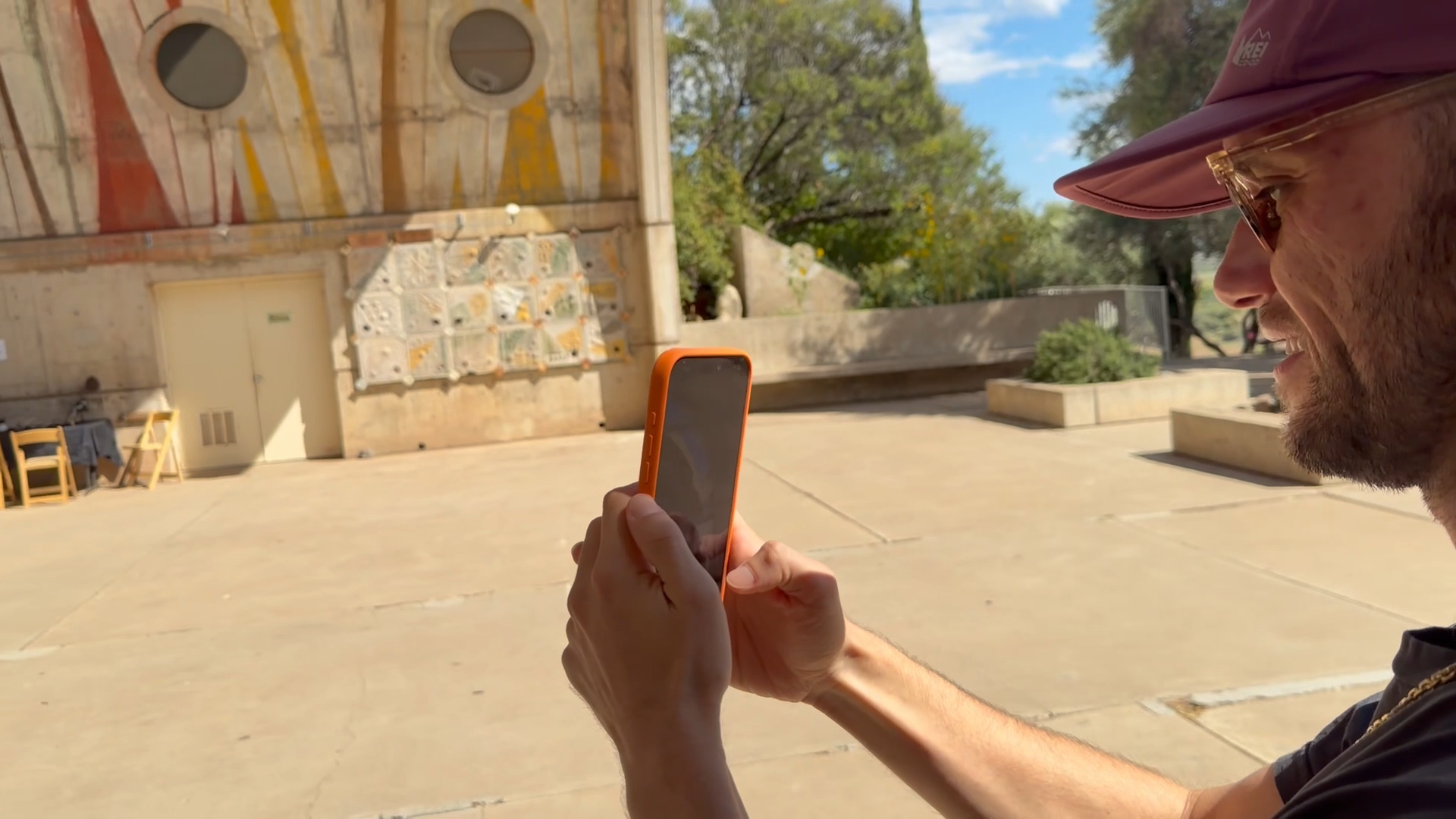
Strategic signage featuring custom visual design (inspired by Soleri’s work) was placed in key locations around the sites. Visitors scan a code, launch the experience, and instantly see the past layered onto the present.
Highlights include:
- A full-size AR arcology model for scale comparison
- 3D Vault models rendered from LiDAR scans
- Previously unseen footage and drawings made accessible for the first time
- Carefully selected on-site placements based on foot traffic and photo activity
Tools and Workflow
Everything was built with accessibility and longevity in mind. The project used:
- Zapworks Designer for world-tracked WebAR
- Photoshop for preparing archival assets
- Illustrator for signage design
- Blender for original 3D assets (provided by architecture students)
- FFmpeg to compress high-res videos
- Premiere & After Effects for light editing
Prototyping was done on-site, with real visitor feedback guiding iteration. As a solo creator, the author also leaned heavily on AI tools (like ChatGPT) to learn workflows and troubleshoot issues across design and dev tools.
Creative Challenges
Like many nonprofit projects, this one was built with:
- No formal budget
- No development team
- No marketing or creative department
Despite that, the biggest challenges were successfully overcome: - Simplifying complex content without dumbing it down
- Designing professional-grade signage that was clear and approachable
- Building for future handoff, not just short-term use
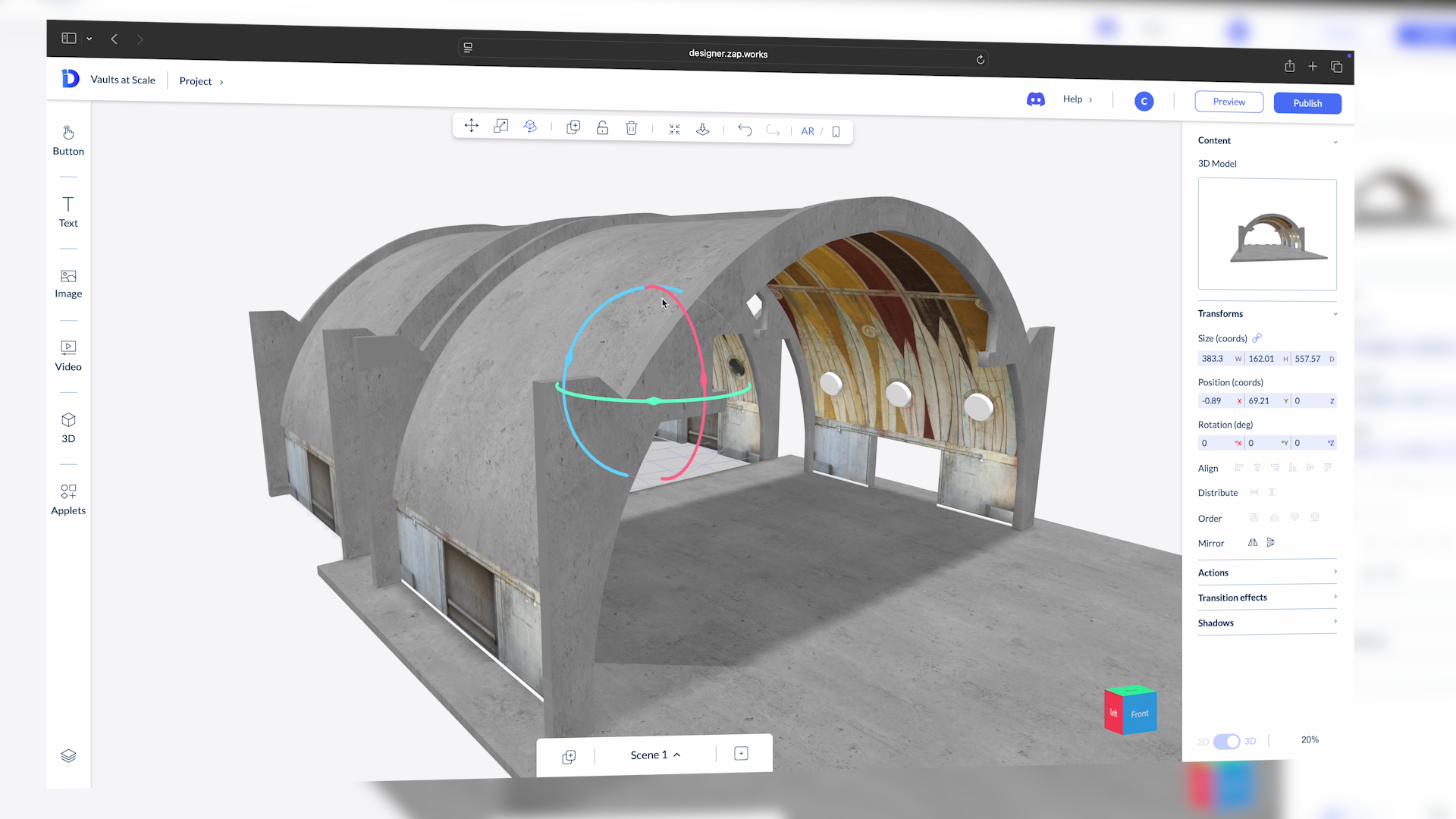
Zapworks Designer made this possible. It offered a flexible, low-friction way to experiment and refine the experiences without getting stuck in code or overly technical tools. The only limitations were minor (e.g. image grouping or signage UX quirks), and the platform made it easy to keep things moving.
Results
The ARCosanti project marked the Foundation’s first-ever AR deployment—and it made an immediate impact:
- Visitors responded with enthusiasm, often sharing screenshots and videos of the experiences
- Staff and board members praised the experience as a meaningful new layer of storytelling
- Access to the archive expanded dramatically—in just 30 days, more people engaged with the assets through AR than had in years of occasional in-person demos
- The workflow was successfully handed off to other team members with minimal training
One of the most promising results was that the project established AR as a new interpretive tool at the Foundation. It showed what’s possible and laid the groundwork for ongoing creation, education, and exploration using immersive tech.
Key Learnings
- Collaboration improves everything. Even with a small team, sharing early drafts and observing real users made a big difference.
- Signage matters. Great AR needs great entry points. Well-designed signage set expectations and improved adoption.
- Build for sustainability. Choosing Designer over more complex tools made it easier for the Foundation to keep using AR beyond the creator’s contract.
What’s Next?
With the proof of concept complete, the Foundation is now positioned to:
- Continue developing new AR exhibits with internal staff
- Expand WebAR use across tours and educational programs
- Seek partnerships and funding with a live, working example to show
Final Thoughts
This case study shows that AR doesn’t need to be expensive, complicated, or out of reach. With Zapworks Designer, even solo creators can build professional immersive experiences that engage, educate, and elevate important stories.
To get started with Zapworks Designer or any of our other 3D tools, head to Zapworks.
We can't wait to see what you create! 😁
 Dave Mather
Head of Marketing