
People spend around 87% of their time indoors. GPS, which fixed getting lost outdoors, can't tell you which floor you're on, let alone which ward or meeting room you're in.
So most of us still find our way around hospitals, campuses, airports and factories the way we did thirty years ago: signs, printed maps, and asking someone who looks like they know.
It's an expensive habit. A 2025 study estimated that staff in US hospitals lose 98 million hours a year to giving directions. That's the equivalent of 51,072 full-time nursing posts. Every complex building has its own version of that problem.
Why we wrote the guide
Indoor navigation has come a long way, but choosing a system is still confusing. BLE beacons, Wi-Fi, UWB, QR codes, visual positioning, AR. Every vendor has a favourite, and not many will tell you where it falls short.
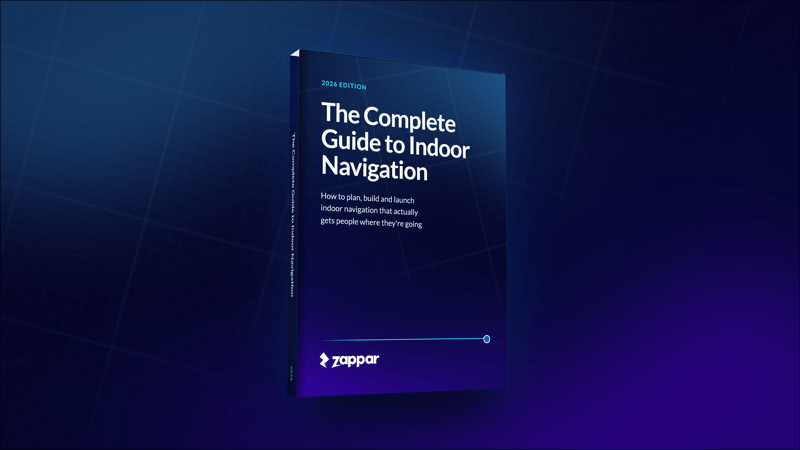
So we wrote The Complete Guide to Indoor Navigation. It's written for the people who actually buy and run this stuff: estates and facilities teams, workplace experience managers, accessibility leads, operations and IT.
What's inside
- How indoor navigation works, and how it differs from an indoor map or a sign
- A straight comparison of every major positioning technology, with honest notes on accuracy, maintenance and accessibility
- Use cases with a pilot starting point for each, from hospitals and campuses to warehouses, airports, museums and events
- Accessibility as a design requirement, so blind, low-vision and wheelchair-using visitors can use the same system as everyone else
- App-based vs app-free, and why asking a visitor to download an app first is a barrier most won't cross
- A vendor checklist, KPIs and a business case template to help you get sign-off
We're also upfront about where things go wrong. Camera-based positioning can struggle in corridors that all look the same, AR isn't right for every building, and maps go out of date as layouts change, so knowing that before you start makes for a much smoother rollout.
Who it's for
If you're looking after a building that people struggle to find their way around, this is for you. You don't need to be technical to follow it, and it isn't a sales pitch. You'll learn how to evaluate any option, including ours.
Want to see it in a real building? Take a look at Zapworks Spaces, our app-free indoor navigation for complex environments, with turn-by-turn guidance for sighted, low-vision and blind users in one shared experience.
 Dave Mather
Head of Marketing